| 
format 21 x 24 cm, 120 pages
ca. 100 duotone photographs
english original version
ISBN 978-3-937946-16-0
hardcover (incl. embossed printing) & dustcover / stitch binding
Price: 29,95 EUR
ISBN
978-3-937946-15-3
softcover
Price:
19,90 EUR |
In
the late 70’s New York City was in the throes of bankruptcy. The
Lower Eastside was a wasteland of boarded up buildings and unfenced
vacant lots. These were the days before kids became preoccupied with
video games, cell phones and MP3 downloads. Needles contaminated with
HIV had not yet appeared nor had a widespread fear of pedophiles. Kids
roamed their neighborhoods unsupervised, giving their imaginations free
rein.
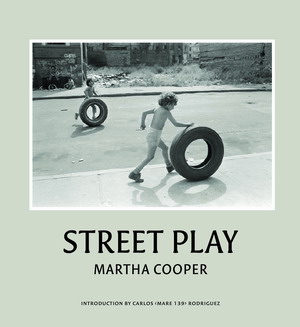
Martha Cooper’s
photos take us through the Alphabet City of the late 70’s as the
area was about to undergo extensive urban renewal—a process that
is still continuing today. At the time, the neighborhood had more than
its share of drug dealers and petty criminals, and the landscape seemed
ugly and forbidding. But to the children who grew up there, the abandoned
buildings and rubble-strewn lots made perfect playgrounds, providing
raw materials and open space for unsupervised play. A crumbling tenement
housed a secret clubhouse, rooftops became private aviaries, and a pile
of trash might be a source for treasure.
With a poignant
memoir from Carlos "MARE 139" Rodriguez, a boy who remembers
the excitement of growing up playing on the streets of New York City
but who now wants something different for his son, Street Play shows
the creative and indomitable spirit of city kids determined to make
the best of their inhospitable environment. Today the neighborhood is
transformed. Martha Cooper’s work attests to a transitional, post-tenement
and pre-artist period on the Lower East Side when street culture held
turf in Alphabet City.
"Coopers’
remarkable photos capture the spontaneous and improvisatory nature of
children’s play. Most of all her photos illuminate the way the city
itself, with its alluring fire hydrants, manhole covers, and rooftops,
became a game board in an era when unsupervised play offered children
a free school of the streets."
STEVE ZEITLIN, Director, City Lore

|


